Aditya Mathur
Jun 1, 2026
Why Choosing the Right Equipment is Crucial for Live Streaming and Broadcasting | Complete Guide
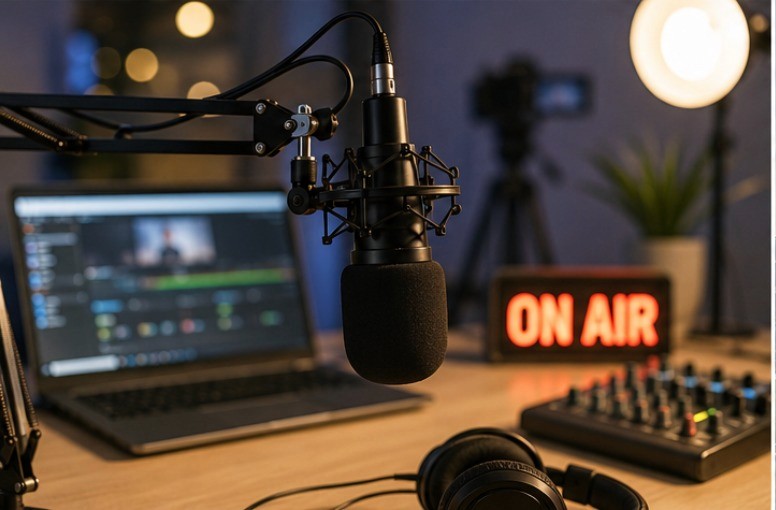
In today's digital-first world, live streaming and broadcasting have transformed how brands, creators, sports organizations, production houses, and businesses connect with audiences. From corporate events and concerts to sports coverage and product launches, live content has become one of the most powerful forms of communication.
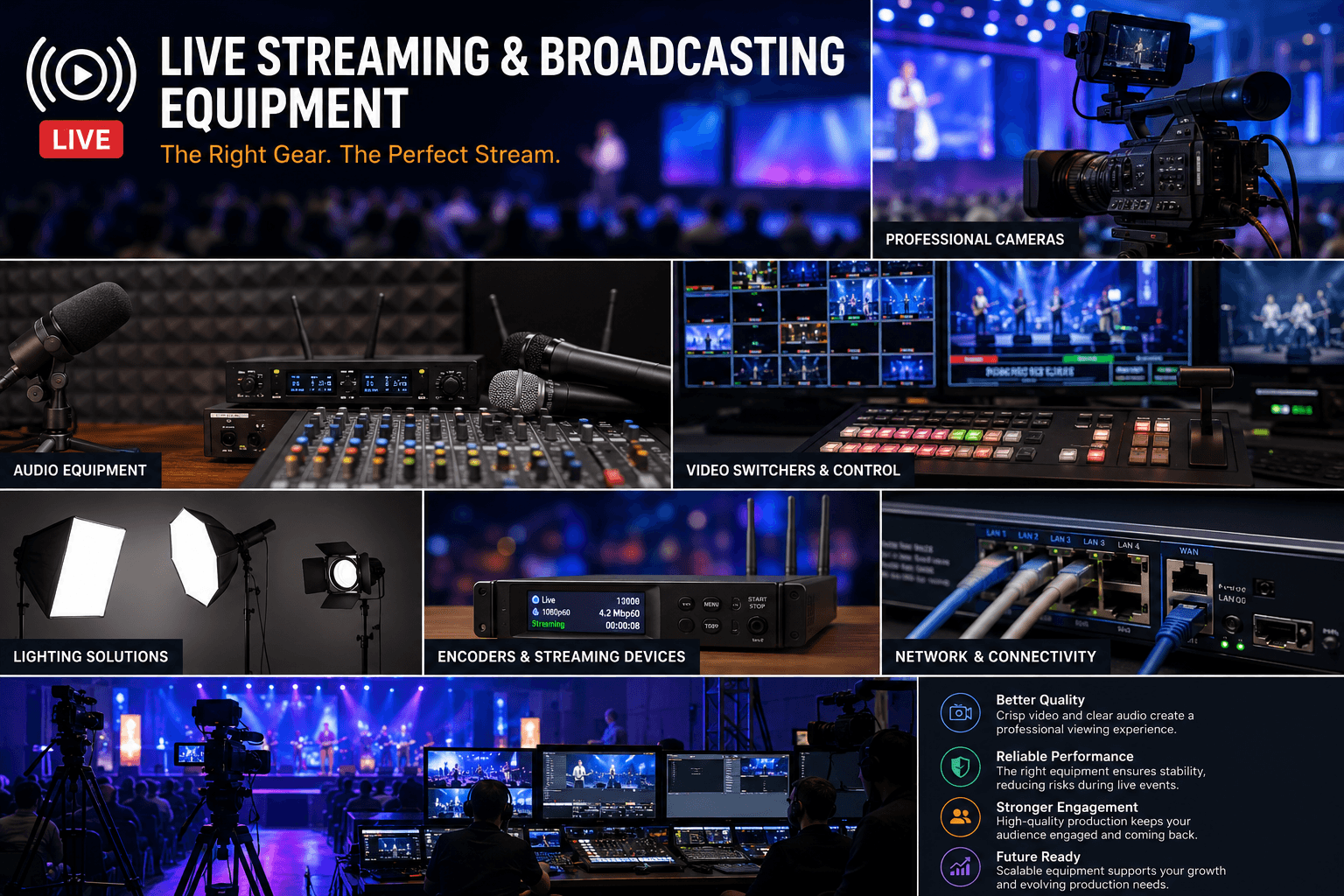
However, delivering a seamless and professional live experience requires much more than simply pressing a "Go Live" button. Behind every successful stream is a carefully selected combination of cameras, audio systems, encoders, lighting, switchers, and networking infrastructure.
The quality of your live production heavily depends on choosing the right equipment.
First Impressions Depend on Production Quality
Audience attention spans continue to become shorter. Within seconds, viewers decide whether they want to continue watching or move to another stream.
Poor production quality can immediately create problems such as:
• Pixelated video quality
• Audio delays
• Frame drops
• Unstable streams
• Poor lighting
• Connection interruptions
Even valuable content can lose impact if technical execution fails.
Professional-grade live streaming equipment ensures:
✓ Clear visuals
✓ Crisp audio
✓ Stable transmission
✓ Better viewer retention
✓ Stronger brand perception
Audio Quality Matters More Than Video
Many people focus heavily on cameras while underestimating audio systems. As a technical producer, one common reality in live broadcasting is:
Viewers may tolerate average visuals, but they rarely tolerate poor sound.
Low-quality microphones, signal interference, or incorrect audio mixing can instantly reduce viewer engagement.
Essential audio equipment includes:
Wireless microphones
Audio mixers
Audio interfaces
Monitoring systems
Backup audio recording solutions
Good audio creates a stronger emotional connection between speakers and audiences.
Cameras Determine Visual Storytelling
Different productions require different camera setups.
For example:
Corporate Events:
Single or dual-camera setup
Sports Broadcasting:
Multi-camera systems with long lenses
Podcasts:
Static cameras with controlled framing
Concerts and Entertainment:
Dynamic cameras with movement capabilities
Choosing the right streaming cameras allows producers to create engaging visual experiences while maintaining consistent broadcast quality.
Factors to consider include:
Resolution capability
Frame rates
Low-light performance
Lens compatibility
Connectivity options
Reliable Network Infrastructure Prevents Failure
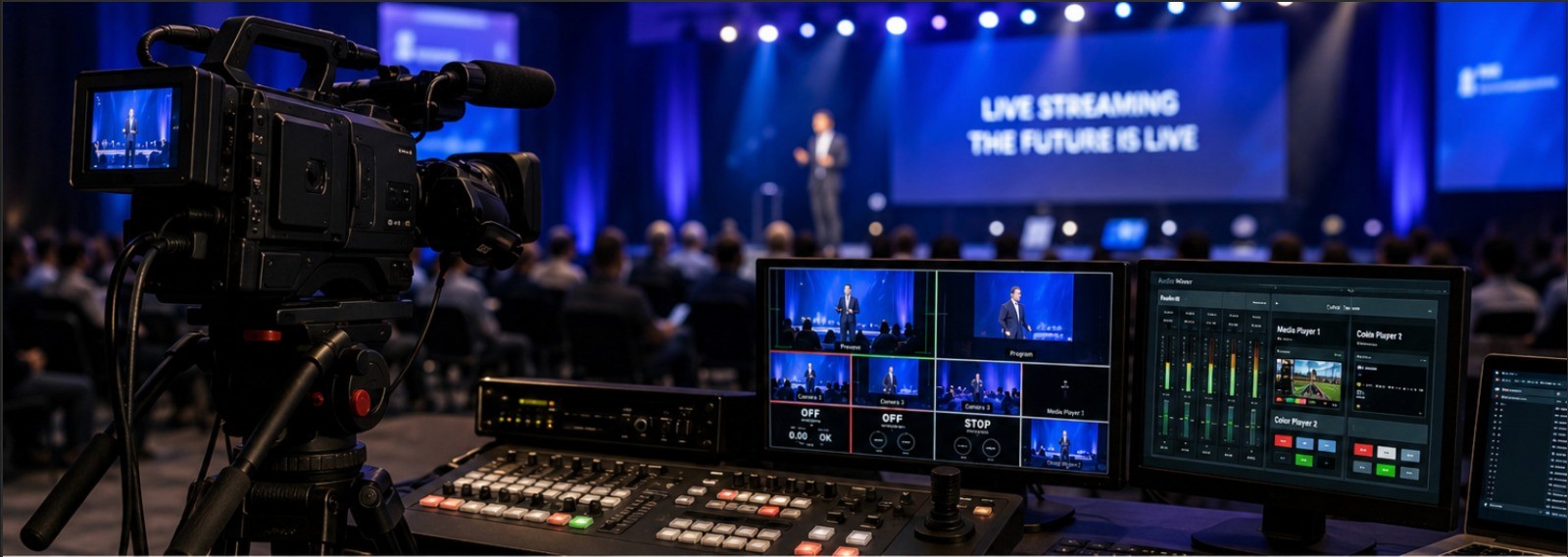
A high-quality camera setup becomes ineffective if internet connectivity is unstable.
Network reliability directly affects:
Stream consistency
Latency
Upload speed
Viewer experience
Professional live productions typically use:
Dedicated internet lines
Network bonding systems
Backup connectivity
Hardware encoders
Redundant network solutions
Having backup systems minimizes risks during critical broadcasts.
The Right Equipment Improves Scalability
Production requirements evolve over time.
A small live stream today may eventually expand into:
Multi-camera productions
Remote guest integration
International streaming
Multi-platform broadcasting
Large-scale live events
Investing in scalable broadcasting equipment prevents expensive upgrades later and supports future growth.
Reduced Technical Issues During Live Production
Live broadcasts happen in real time.
Unlike recorded content, there are no opportunities for major corrections after the event begins.
Using reliable equipment helps reduce:
Signal failures
Sync issues
Hardware crashes
Audio disruptions
Video interruptions
For technical producers, prevention is always more effective than troubleshooting during a live event.
Better Audience Engagement and Brand Reputation
High-quality production directly influences audience perception.
Professional live streaming creates:
Increased viewer trust
Higher engagement rates
Better watch time
Improved audience retention
Stronger brand credibility
Whether you're broadcasting a sporting event, product launch, webinar, or concert, production quality becomes part of your brand identity.
Final Thoughts
Successful live streaming and broadcasting are built on strong technical foundations. Cameras, microphones, switchers, encoders, lighting systems, and network infrastructure all play a vital role in creating a seamless viewer experience.
Choosing the right equipment is not simply a technical decision—it is an investment in quality, reliability, audience engagement, and long-term production success.
As live content continues to dominate digital communication, organizations that prioritize the right technology and production tools will always stand out.
Tags:
#LiveStreaming #Broadcasting #LiveProduction #StreamingEquipment #BroadcastSolutions #VideoProduction #LiveEvents #BroadcastTechnology #MediaProduction #StreamingSetup
Image